Case Study - Retail and Property Management - South Austin
Three Parking Spaces, One Oil Spill, and a Lot That Had to Open on Time
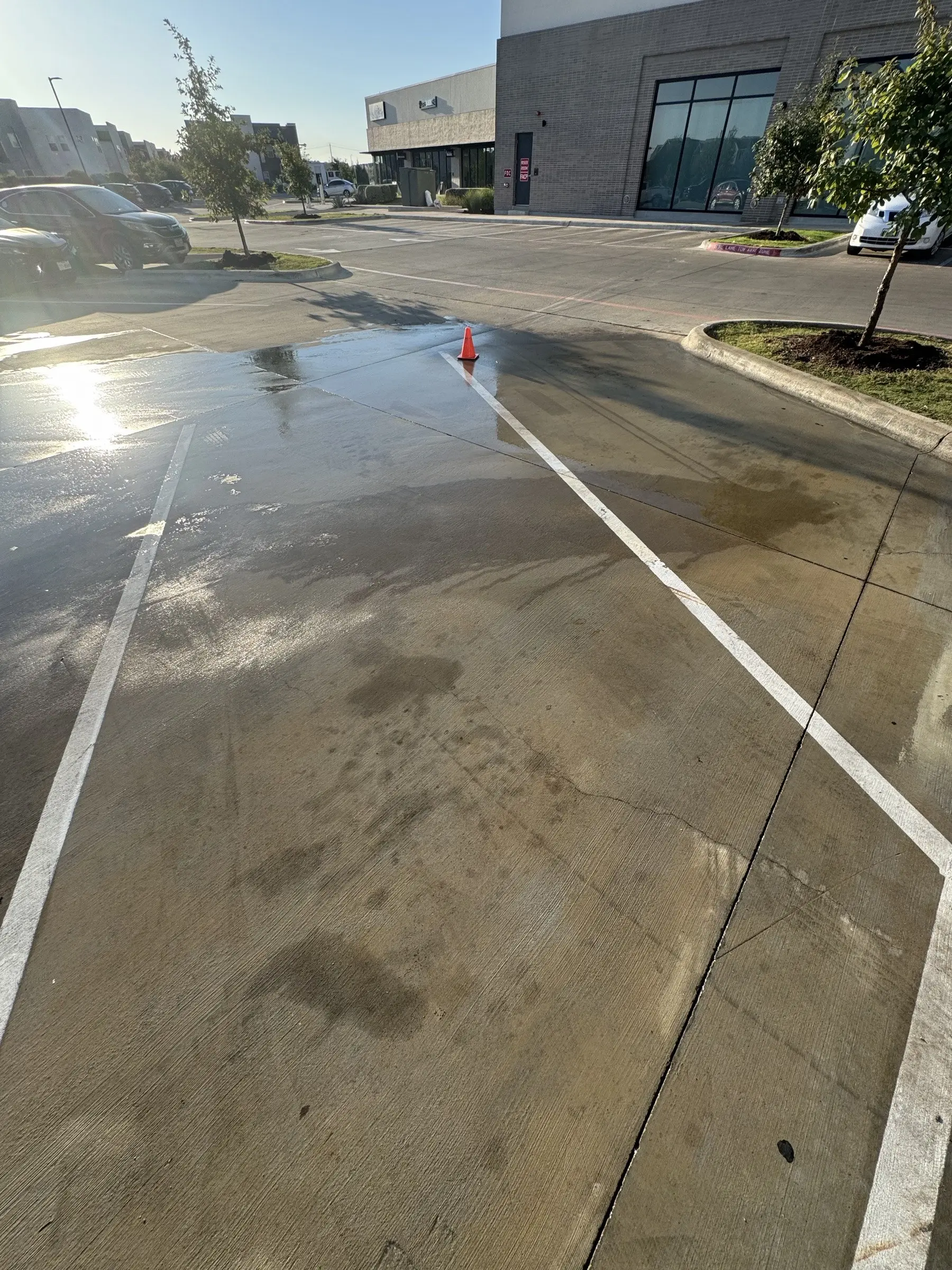
A shopping center cannot close its parking lot for a morning. GW Partners called the week before with an urgent cleanup, so we worked the spill in the dark and handed the spaces back before the first tenant unlocked.
- Client
- GW Partners
- Property
- Shopping center off Slaughter Lane
- Affected area
- Three parking spaces
- Window
- 6:00am to 8:30am, before opening
The short version
GW Partners manages a shopping center off Slaughter Lane in South Austin and called a week ahead with an urgent cleanup: oil spread across three parking spaces. A retail lot cannot be closed during trading hours, so the work was scheduled before the center opened. We were on site at 6am and clear by about 8:30. The slick, glossy top layers came off and the spaces went back into service safe to walk and drive on. Some discoloration stayed in the concrete, and that was the right trade rather than a compromise.
Working before the center opened
The constraint on a retail lot is not the oil, it is the trading day. Every space that is coned off is a space a tenant's customer cannot use, and a shopping center that blocks its own parking during business hours loses the tenants money. The only window that costs nobody anything is the one before the doors open.
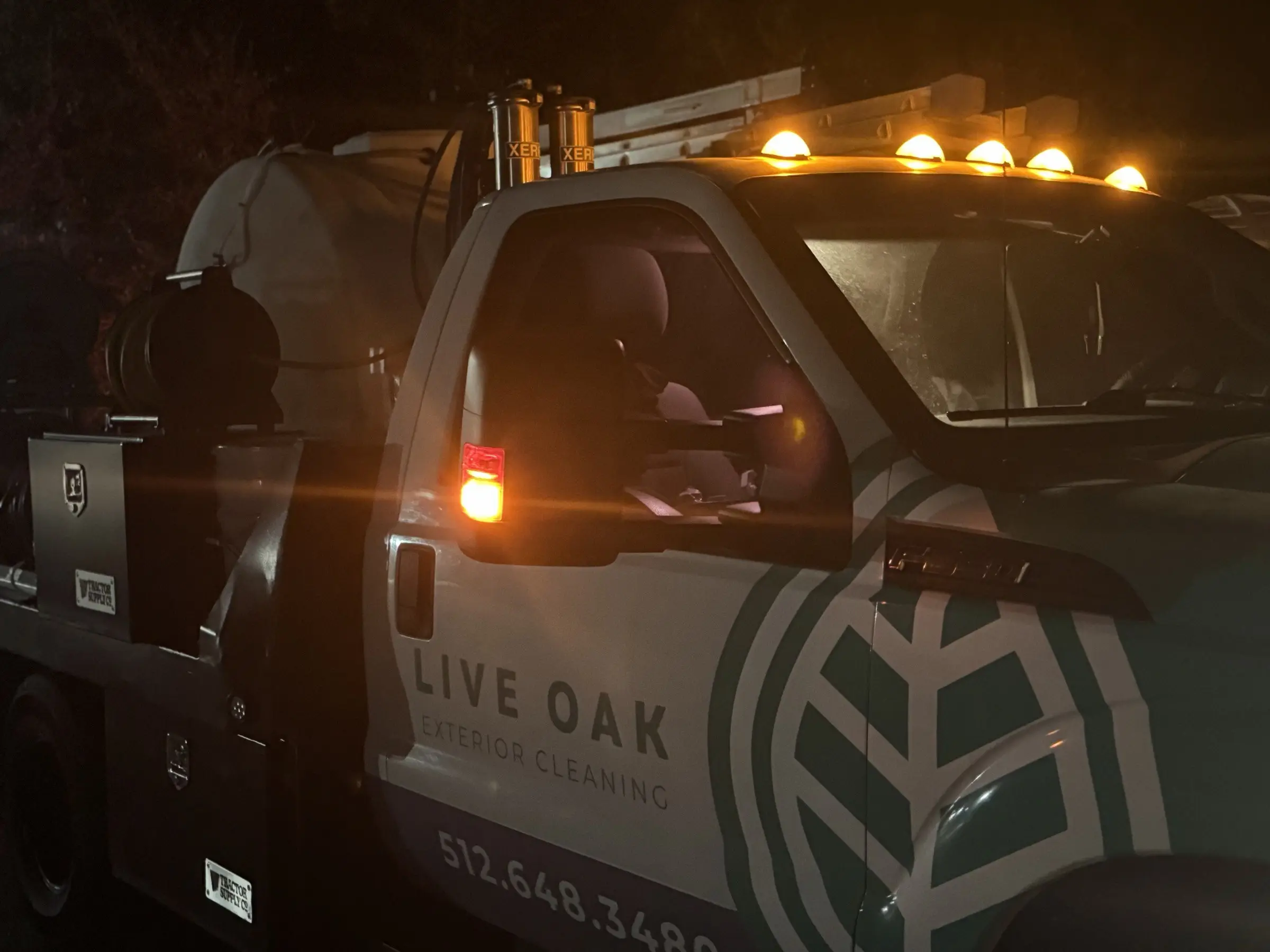
So the job was scheduled into the dark. On site at 6am, lit by the truck, with the goal of being off the lot and out of the way before the first staff member arrived to unlock.
Why an oil spill is not a pressure washing job
Oil on concrete is a different problem from dirt on concrete, and treating it like the latter is how a lot ends up with a spill spread wider than it started.
-
The absorbent has to come up first
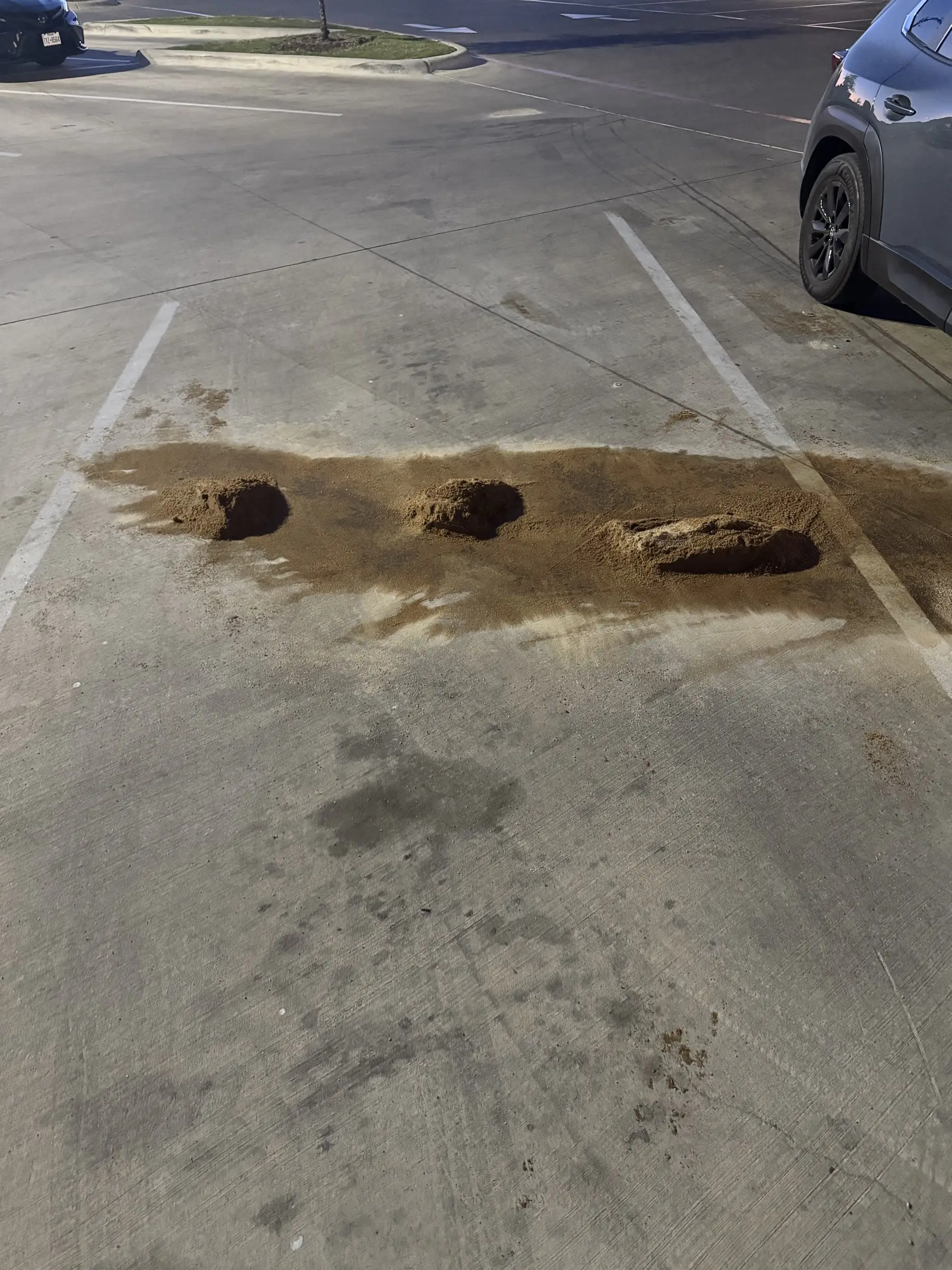
Granular absorbent is what stops the spill spreading, but it then has to be swept into piles and physically scooped off the lot. It is the slowest part of the morning and there is no way to shortcut it. Wash it toward a drain and you have turned a contained spill into a drainage problem.
-
Oil does not lift in one pass
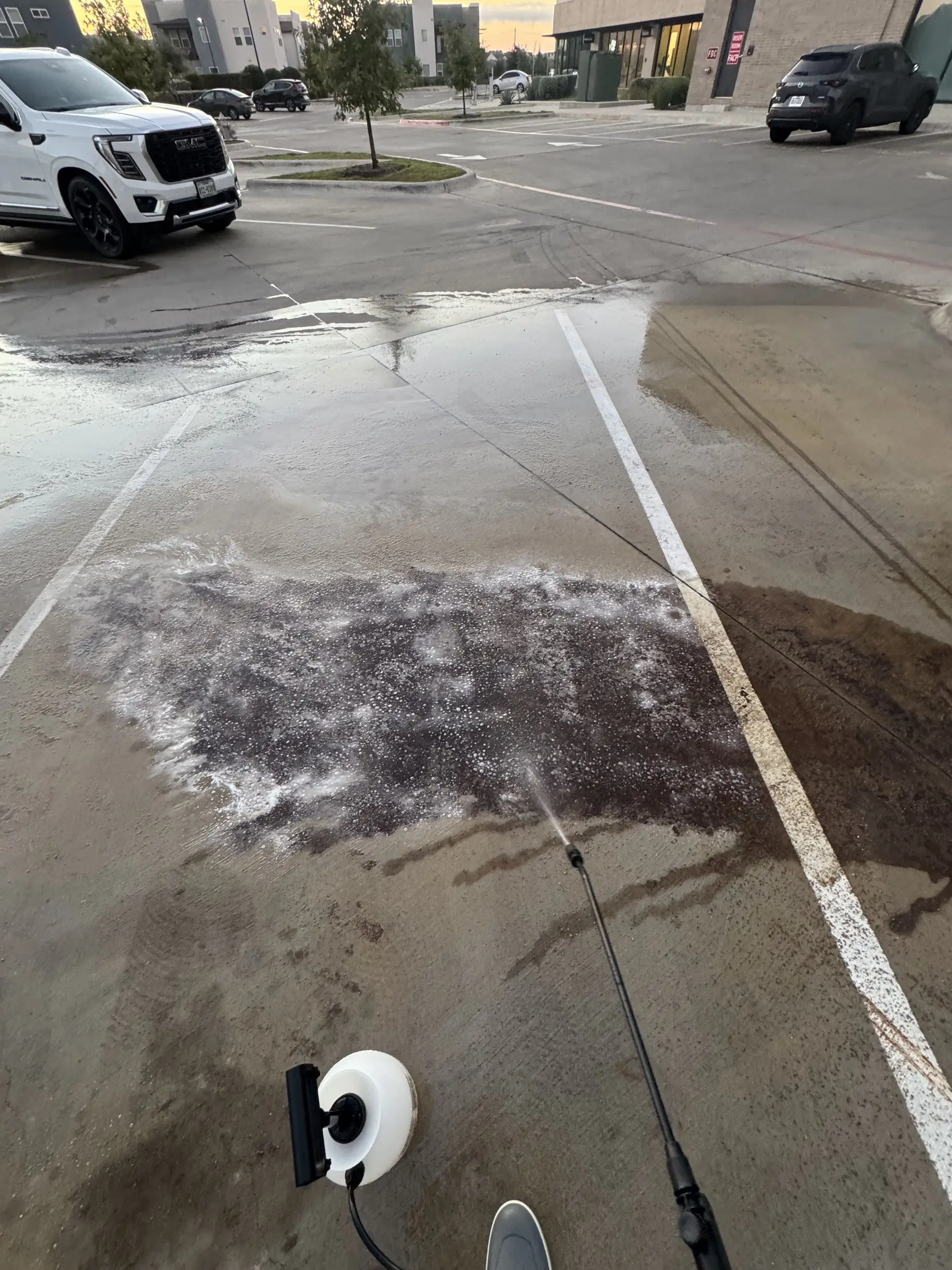
What soaks into concrete comes out in stages. Degreaser goes down, gets its dwell time, gets surface cleaned, and then the next round starts on what is left. Several applications and several cleaning sessions, not one pass with a wand.
-
A parking lot is a safety surface
The thing that makes an oil spill urgent is not that it looks bad. It is that it is slick underfoot and under tires. Traction is the deliverable, and it is the one that has to be finished before the lot reopens.
-
The clock is the trading day
There is no extending the window. Tenants open when they open, and a lot still being worked at opening time is a problem for the property manager who scheduled it.
Absorbent swept, then scooped
The absorbent had done its job of holding the spill in place, which meant the morning started with brooms rather than machines. Swept into piles across the three spaces, scooped up and carried off the lot, so that what came next was working on the concrete instead of on a layer of saturated granules.
Degreaser, dwell, surface clean, repeat
With the absorbent gone, the actual treatment could start: degreaser applied across the affected spaces, given time to work, then surface cleaned off. Then the same again on what remained. Each round took more off the surface than the one before, and the rounds continued until the slick was gone rather than until a set number had been done.
How we approached it
- The week before
The call comes in
GW Partners reaches out with an urgent cleanup and a constraint: it cannot happen during trading hours.
- 6:00am
On site in the dark
Truck lit, spaces coned, absorbent swept into piles and scooped off the lot.
- Through dawn
Multiple treatment rounds
Degreaser applied, given dwell time and surface cleaned, repeated until the slick top layers were gone.
- 8:30am
Spaces back in service
Cones pulled, lot safe to walk and drive on, before the first tenant opened.
The outcome
Safe before opening, and honest about the rest
The three spaces went back into service before the center opened. The slippery, glossy top layers that made the spill a hazard were gone, and the surface was safe underfoot and under tires, which was the thing the call was actually about.
Some discoloration stayed in the concrete. We would rather say that than imply otherwise, because the two are different problems. Oil that has soaked into a porous slab leaves a shadow, and chasing that shadow out of a retail lot means aggressive treatment on a surface that does not need it, more time on a lot that has to open, and a cost the property does not get value back from. The hazard was the job. The stain was cosmetic, and it was the right thing to leave.
Managing a retail property with a problem that cannot wait?
Spills, stains and safety hazards on a trading property are a scheduling problem as much as a cleaning one. We handle urgent flatwork and oil treatment across Austin and Central Texas, worked around your trading hours rather than through them. Commercial inquiries go to Jared directly.
Related
More commercial work
Got something that has to be cleared before you open?
Tell us the scope and the hours you trade. We will tell you straight whether we can work around them.
Rather talk it through? 512-883-5420